
Echonautic Technology
Echonautics Technology
Marine Transducers Engineered for Performance
From acoustic design to manufacturing tolerances, every Echonautics product is developed
to deliver consistent, reliable results in real-world marine conditions.
How CHIRP Technology improves target resolution
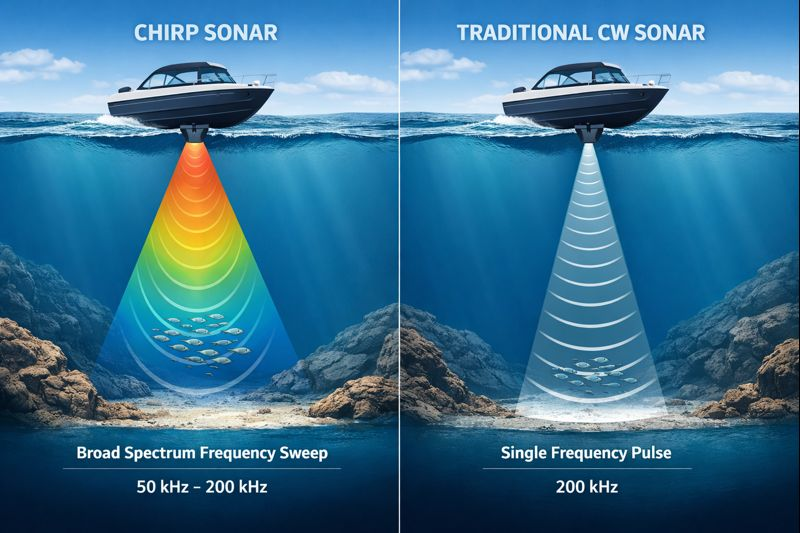
Traditional marine echosounders operate at set frequencies (50 or 200kHz, for example) and transmit a short-duration pulse to display targets under the boat that can be identified by the specific frequency being used.
CHIRP sonar (which stands for Compressed High Intensity Radar Pulse) emits a sweep pattern of many frequencies within a long-duration pulse. As a result, the sound energy delivered underwater is up to 1,000 times greater than conventional sonar — providing better deep-water penetration, improved fish detection and target separation, enhanced bottom detail and better sonar performance at higher vessel speeds.
CHIRP sonar performance can be further enhanced by selecting a transducer style and CHIRP frequency range that best matches the vessel, water conditions, depths fished, and target species. For this reason, Echonautics offers a range of CHIRP transducers in Low, Medium, and High CHIRP frequency ranges. Our experts can help you find the ideal CHIRP transducer and frequency range to maximize your fishing success.
Not all transducers are created equal
It's not just about sonar—it's about elevating standards and advancing sonar technology. At Echonautics, we focus on what truly matters: delivering clear, reliable, and consistent performance. Every transducer we produce is tuned to maximize signal clarity and target resolution.
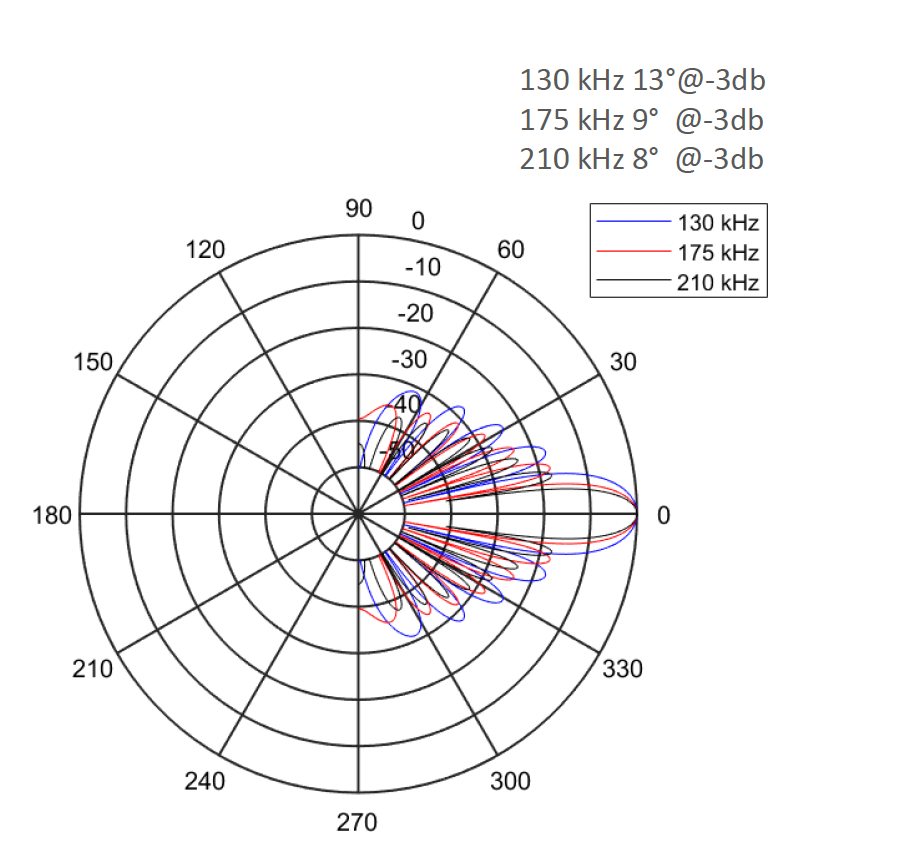
Our transducers are crafted to operate efficiently across a broad frequency range, supporting advanced CHIRP capabilities for deeper penetration—all while maintaining tight beam patterns and low side lobes. This means sharper resolution, better target separation and greater depth penetration.
Echonautics designs each transducer to withstand the demanding conditions of real-world operation, from high-speed flush mounts to transom mounts. Long-term stability, thermal resilience, and mechanical reliability are engineered into every transducer we ship.
Whether you're tracking fish, or navigating murky waters, Echonautics transducers consistently deliver high-performance results.
Sonar Transducer Calibration
Transducer Calibration
At Echonautics, we ensure the highest accuracy and reliability of our sonar transducers through rigorous calibration in a specialized acoustic non-echo tank, conducted by an independent third-party laboratory. This process validates the performance of our transducers, ensuring they meet the exacting standards required for precise underwater mapping and imaging.
Calibration in Non-Echo Tank
Our transducers are tested in a controlled acoustic non-echo tank, designed to eliminate unwanted reflections and provide a clean environment for precise measurements. The anechoic properties of the tank ensure that only direct signals are captured, allowing for accurate assessment of the transducer's performance without interference from echoes or external noise.
Third-Party Validation
Third-Party Validation
To guarantee objectivity and credibility, Echonautics partners with an independent laboratory for third-party validation. This lab employs advanced equipment and standardized protocols to evaluate our transducers, ensuring unbiased results that confirm the reliability and precision of our sonar transducers.
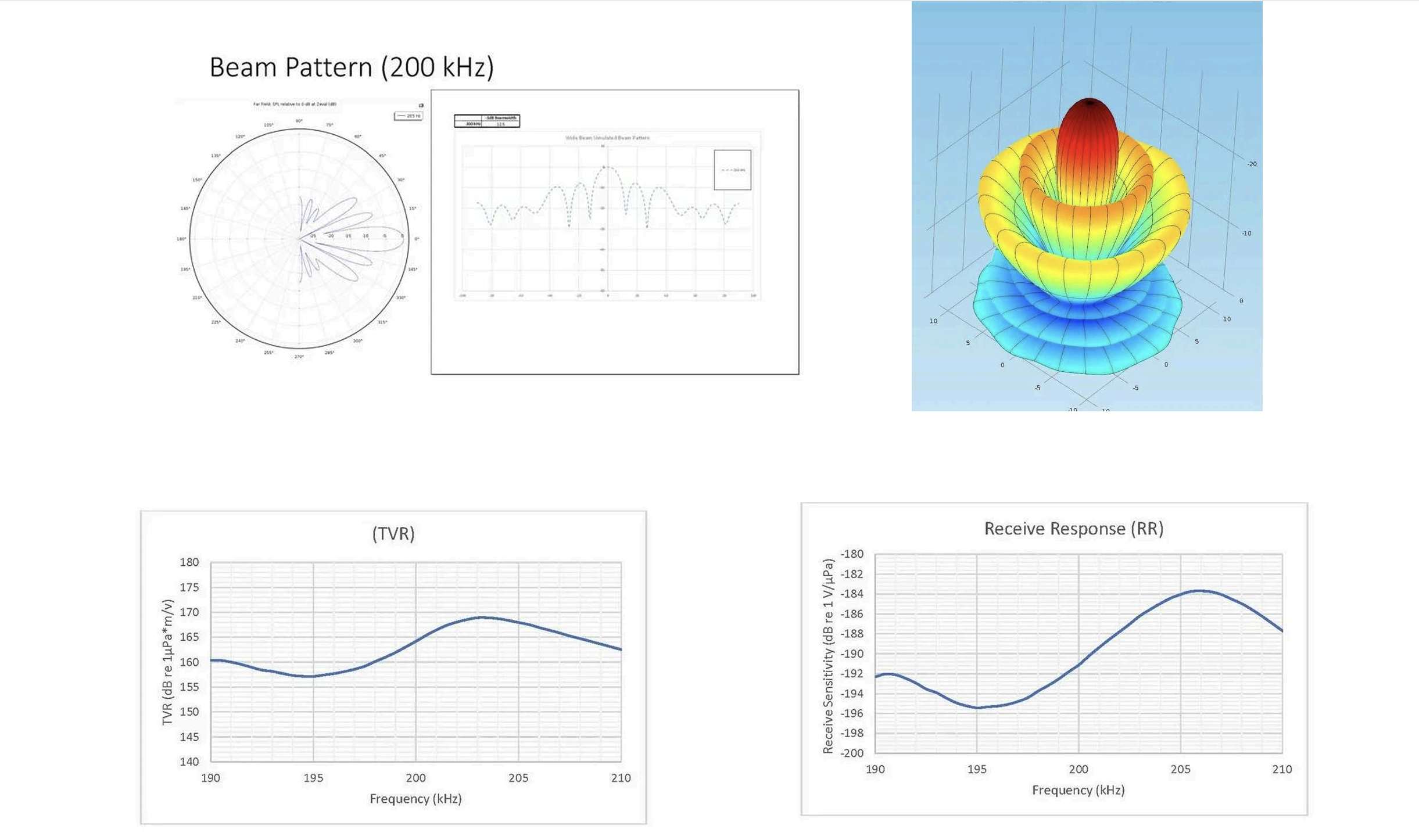
360-Degree Beam Pattern Testing
To assess the transducer’s beam propagation, the independent lab rotates the transducer through a full 360-degree range. This process maps the beam pattern comprehensively, verifying its uniformity and directional accuracy across all angles. The resulting data ensures that our transducers deliver consistent performance for applications requiring omnidirectional coverage, such as underwater surveying and navigation.
Transmit voltage response
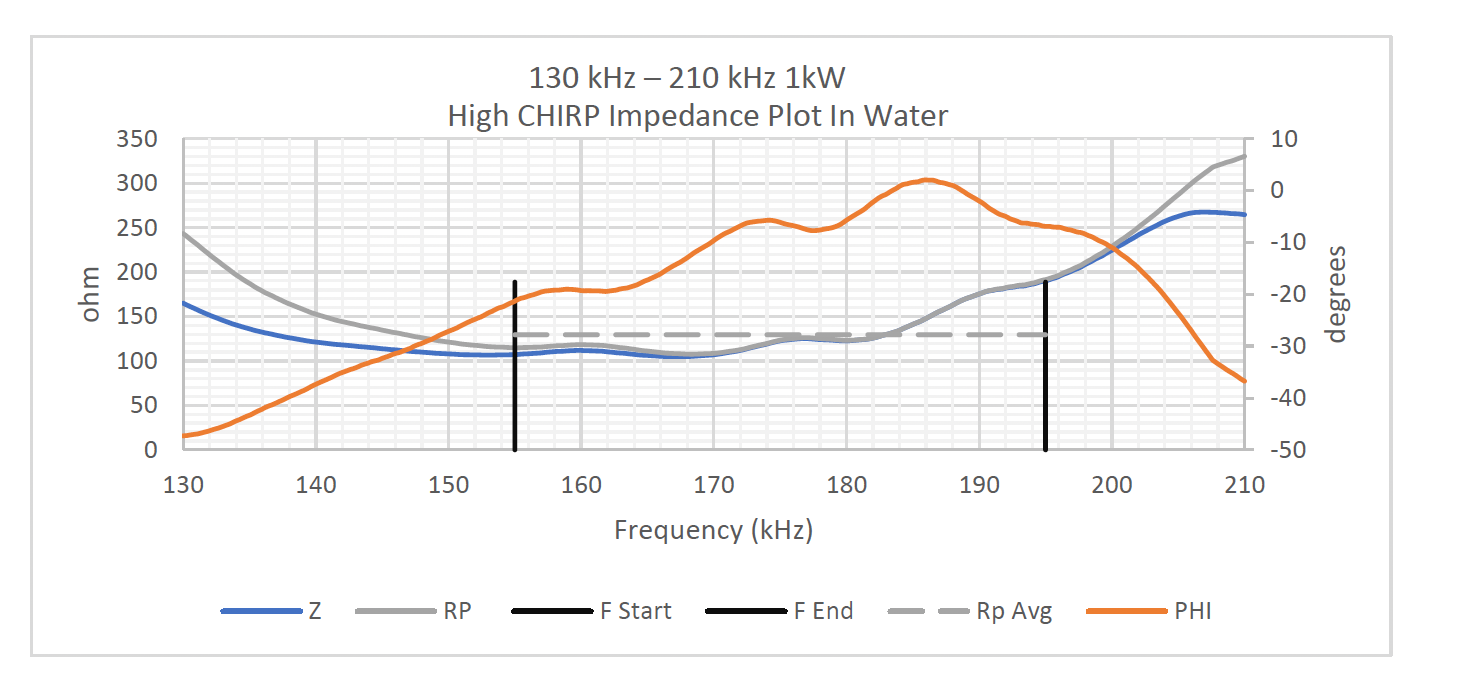
Transmit Voltage Response (TVR) and Receive Response
The calibration process includes precise measurements of the Transmit Voltage Response (TVR) and receive response. TVR testing evaluates the transducer’s efficiency in converting electrical signals into acoustic energy, measuring the sound pressure level generated per unit of input voltage. The receive response is assessed by analyzing the transducer’s sensitivity to incoming acoustic signals, ensuring it accurately detects and processes echoes. These tests are conducted using calibrated reference hydrophones and advanced signal processing to validate performance across operational frequencies.
Echonautics Commitment to Quality
By outsourcing calibration to an independent lab and employing rigorous testing protocols, Echonautics ensures that our sonar transducers deliver unmatched accuracy and reliability. This commitment to quality reinforces our dedication to providing cutting-edge solutions in marine sonar transducers.
Site map
> HOME
> PRODUCTS
> TECHNOLOGY
> WHERE TO BUY
> SUPPORT
> ABOUT US
footer echonautics 1
Advancing Transducer Technology
✓ Made in Italy
✓ 3-Year Warranty
✓ USA & EU Based Professional & OEM Support
✓ Supply from USA and EU Warehouse
footer contacts
ECHONAUTICS
11329 La Madre Ridge Dr. Las Vegas, NEVADA 89135 US
SALES NORTH AMERICA
AvMap Satellite Navigation Inc.
Riverhead, New York 11901, United States, USA
[email protected] | +1 631 996 690
SALES EMEA, APAC, LATAM
AvMap s.r.l.
Viale Zaccagna, 6, 54033 Carrara (MS), ITALY
[email protected] | + 39 0585 772305
